How to build a story bible that stays useful
A story bible is not a second novel. It is a set of decisions that lets you answer a continuity question without rereading twelve chapters.
Build a compact story bible with a free Markdown worksheet, a worked example, and chapter references for characters, world rules, and open promises.
Start with one rule and one consequence
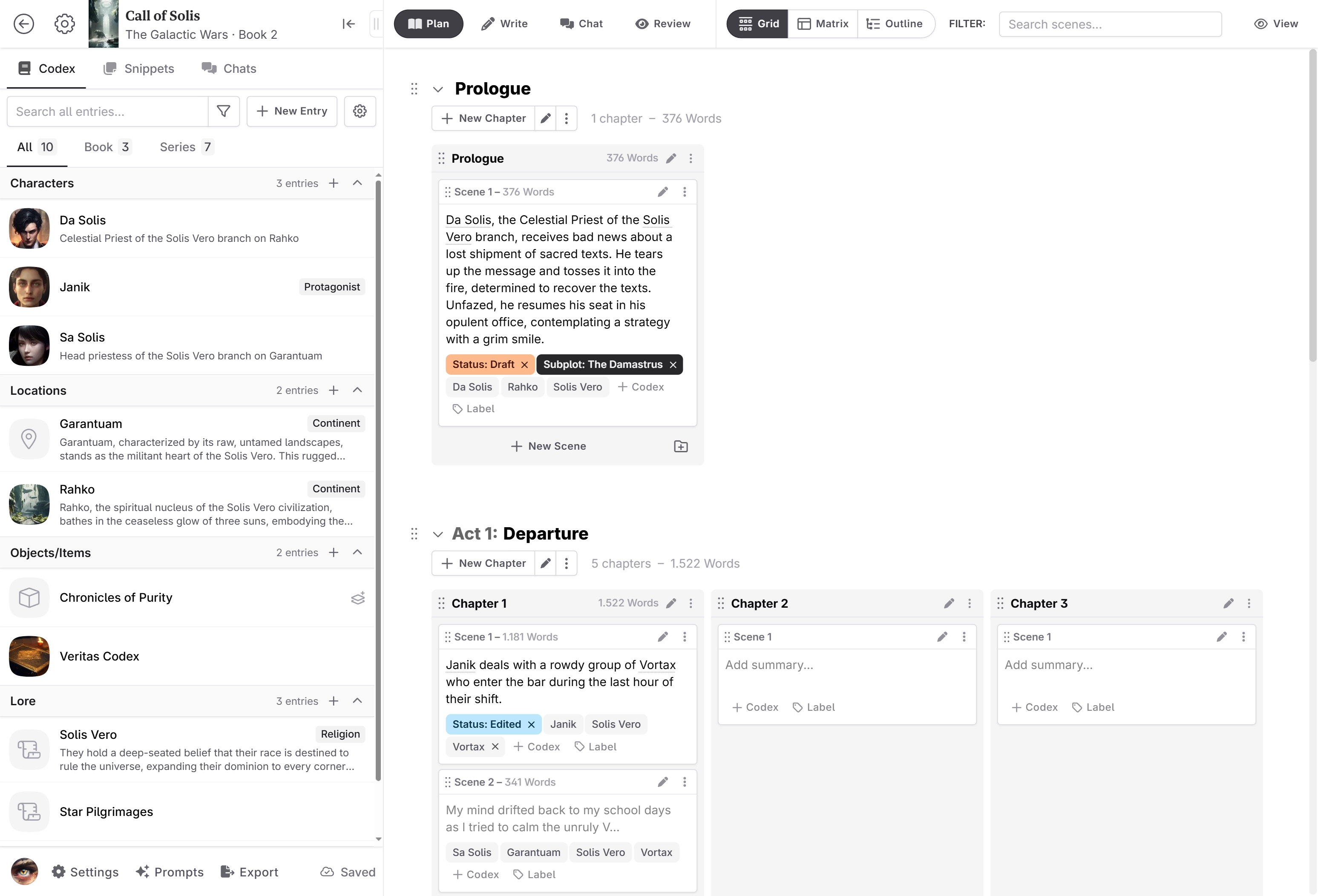
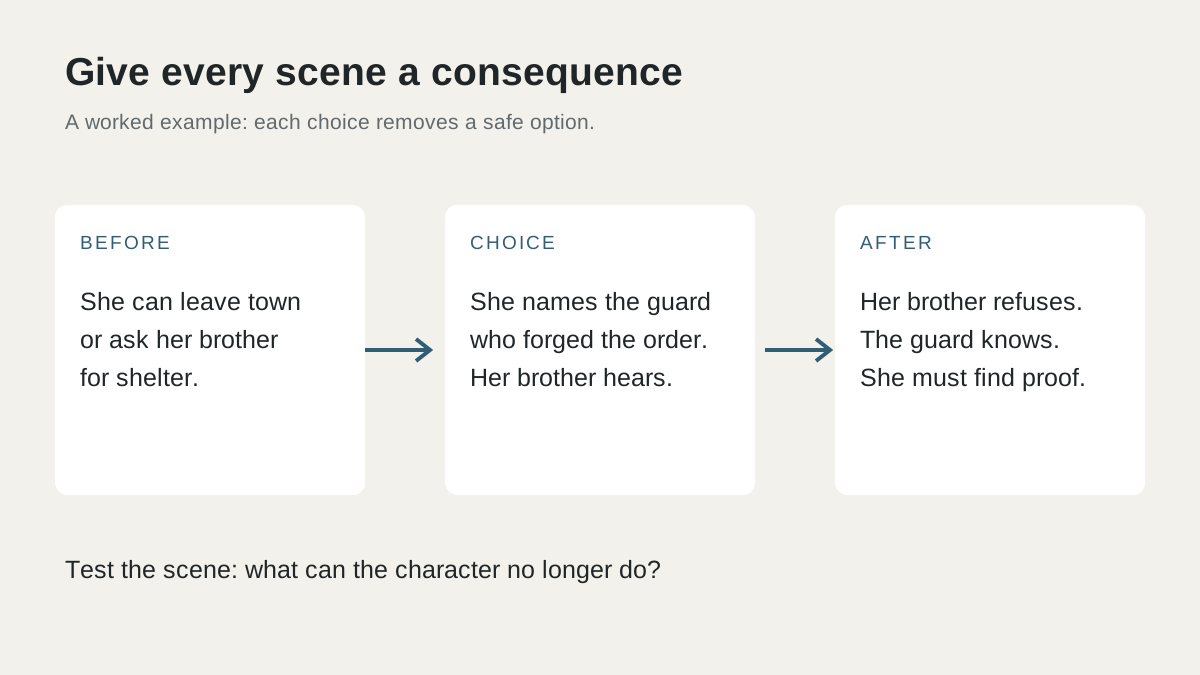
Try this original example: Shen Rui borrows strength by giving up one year of his life. In chapter one, the cost leaves a silver strand in his hair. Mei notices it; Elder Qiao does not yet know what it means. Record each fact separately so a later scene does not give Elder Qiao knowledge he has not earned.
A possible future twist, such as transferring the debt, belongs under open possibilities until the manuscript establishes it. The free worksheet at the end of this guide includes this example and empty fields for your own story.
For fanfiction, record where your canon diverges
Name the source edition or adaptation you are using, then mark the point where your story changes it. A fact can be true in the source and false in your alternate timeline. Keep source facts, your story facts, and possible future changes separate.
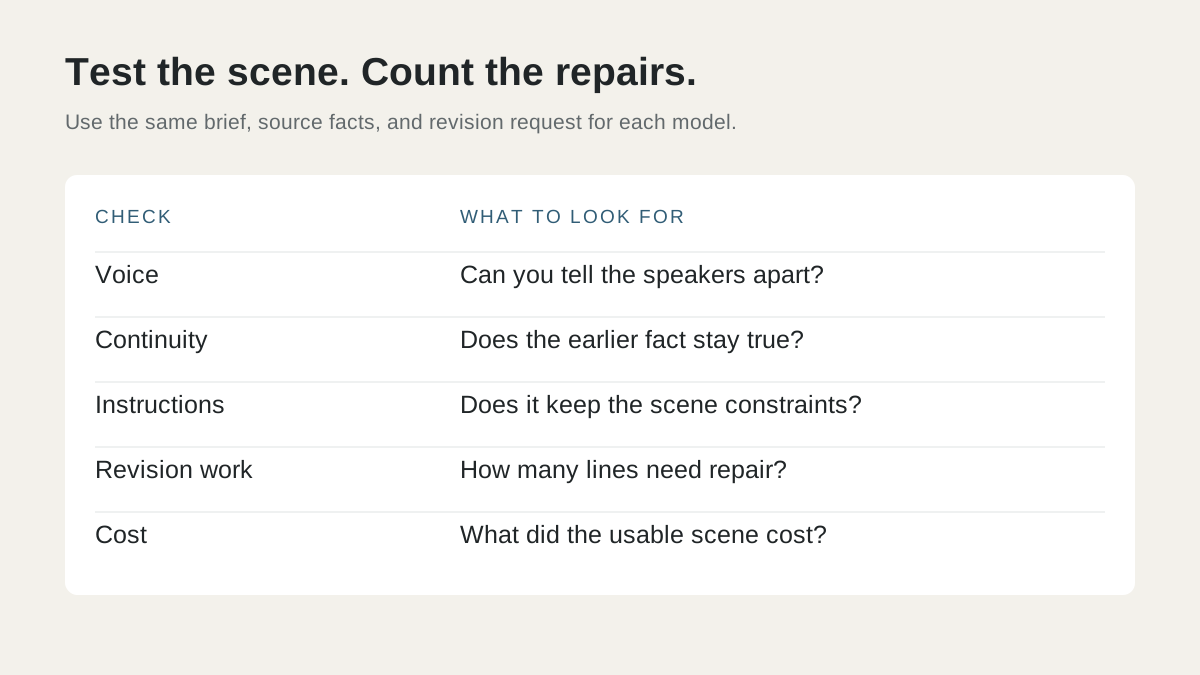
For a web serial, add the chapter where each fact becomes public. Check the record before a release, especially after a long break or a change of viewpoint.
Record facts at the moment they become true
Create an entry when the draft commits to a fact, not when you first imagine it. Separate confirmed canon from options. This prevents an abandoned idea from returning as if it appeared on the page.
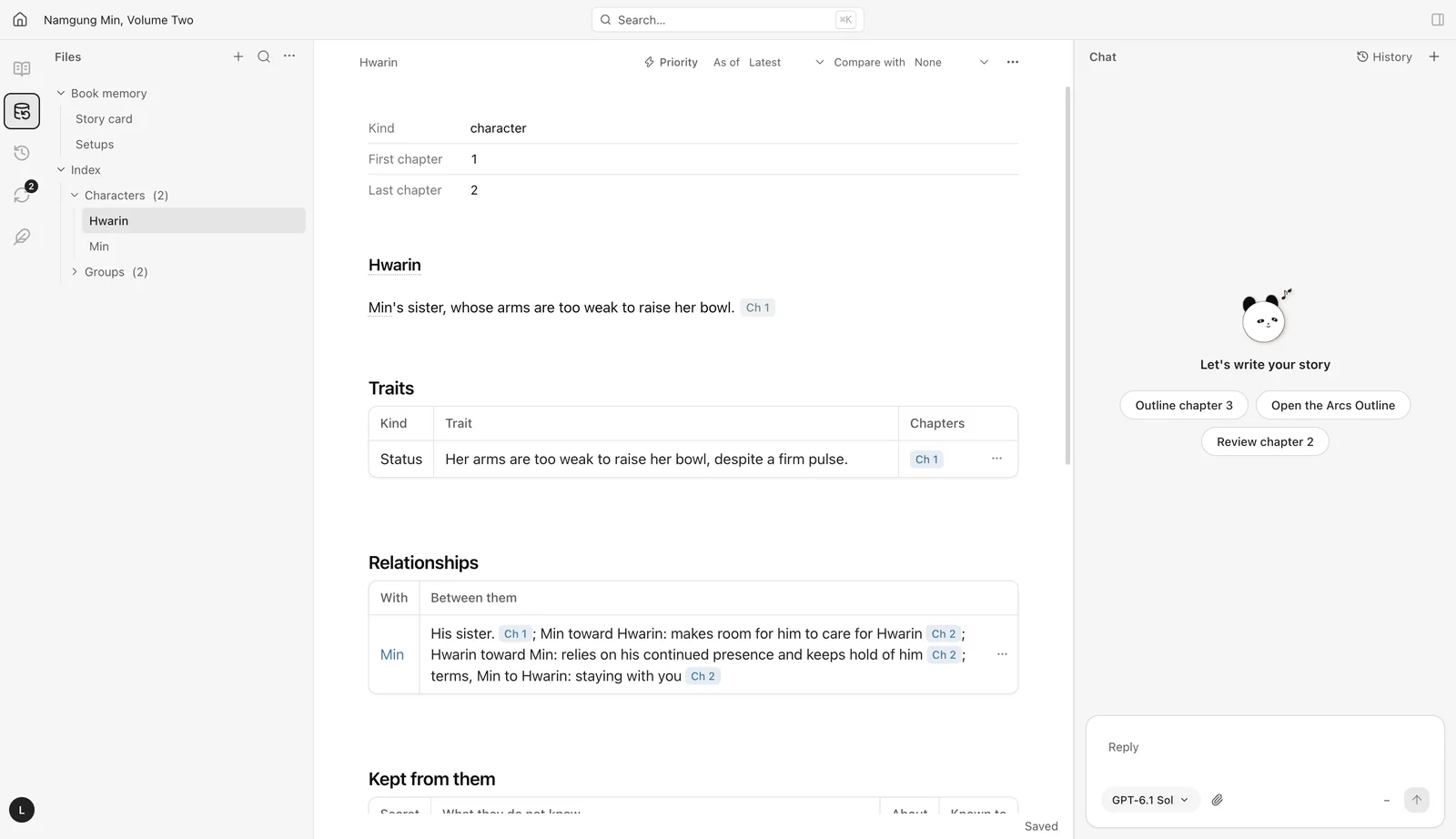
Each entry needs a short label, the fact, its first chapter, and any later change. Keep explanation brief enough to scan during a revision.
Use five small groups
Start with people, places, organizations, rules, and timeline events. Add a sixth group for open promises if the story has mysteries, prophecies, debts, or planted objects that must return.
- People: goals, relationships, voice, physical facts
- Places: layout, access, travel time, atmosphere
- Rules: magic, technology, law, social limits
- Timeline: dated or ordered events
- Promises: setup, expected payoff, current status
Link facts to scenes
A character page is more useful when it names the chapter where a scar, oath, or secret entered the story. Links let you verify wording and context instead of trusting a summary written months ago.
Review the bible at fixed checkpoints
Update it after a chapter is accepted, after a structural rewrite, and before a new arc begins. Remove duplicate notes and mark replaced facts. A small trusted bible is better than a large archive that mixes canon with guesses.