Novelcrafter review: where it fits in a long-fiction workflow
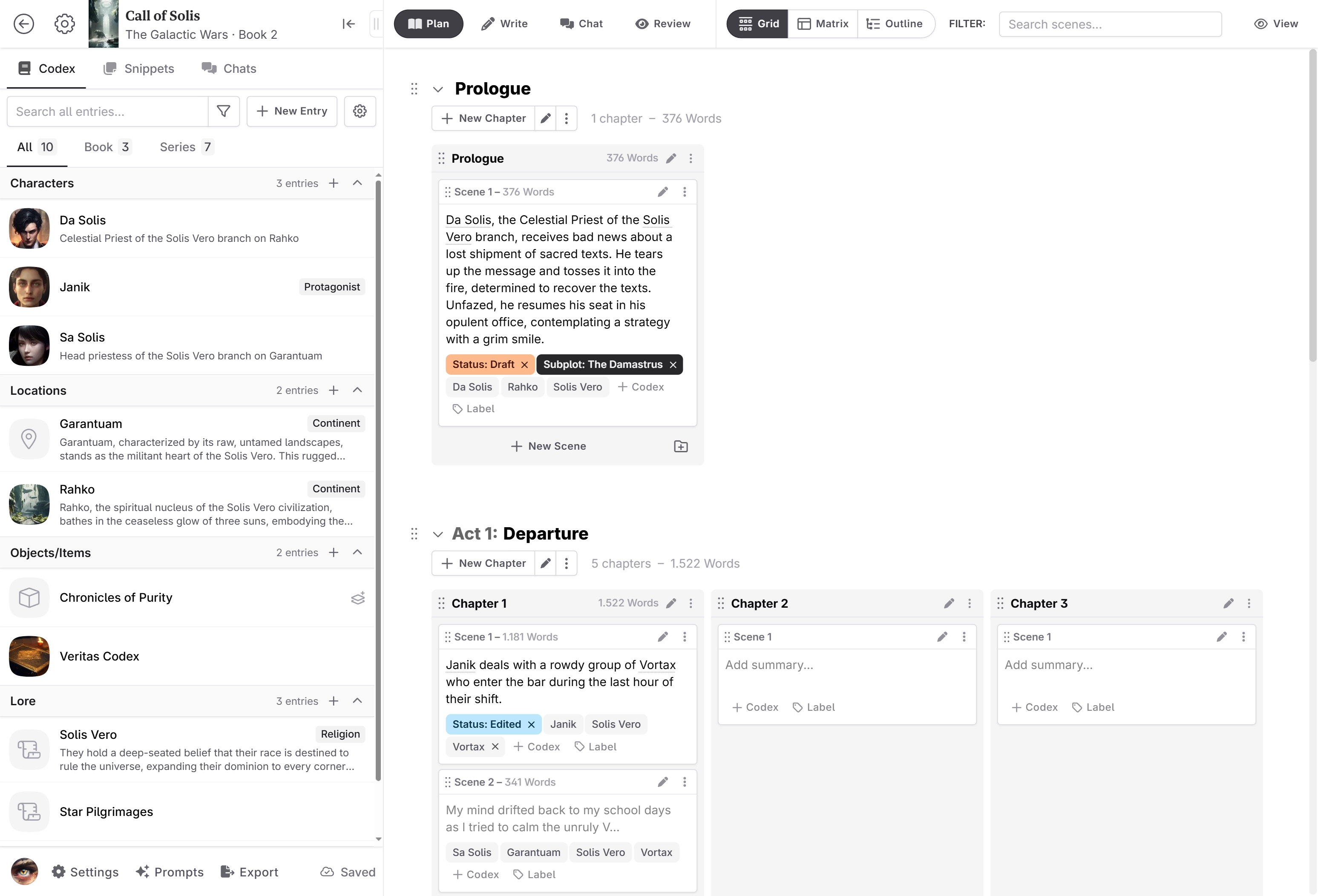
Novelcrafter is a planning and writing workspace for long fiction. Its strongest idea is the Codex, a structured wiki for characters, places, lore, and information that can be shared across books.
A clear look at Novelcrafter planning, Codex, collaboration, and bring-your-own-model workflow.
What Novelcrafter does well
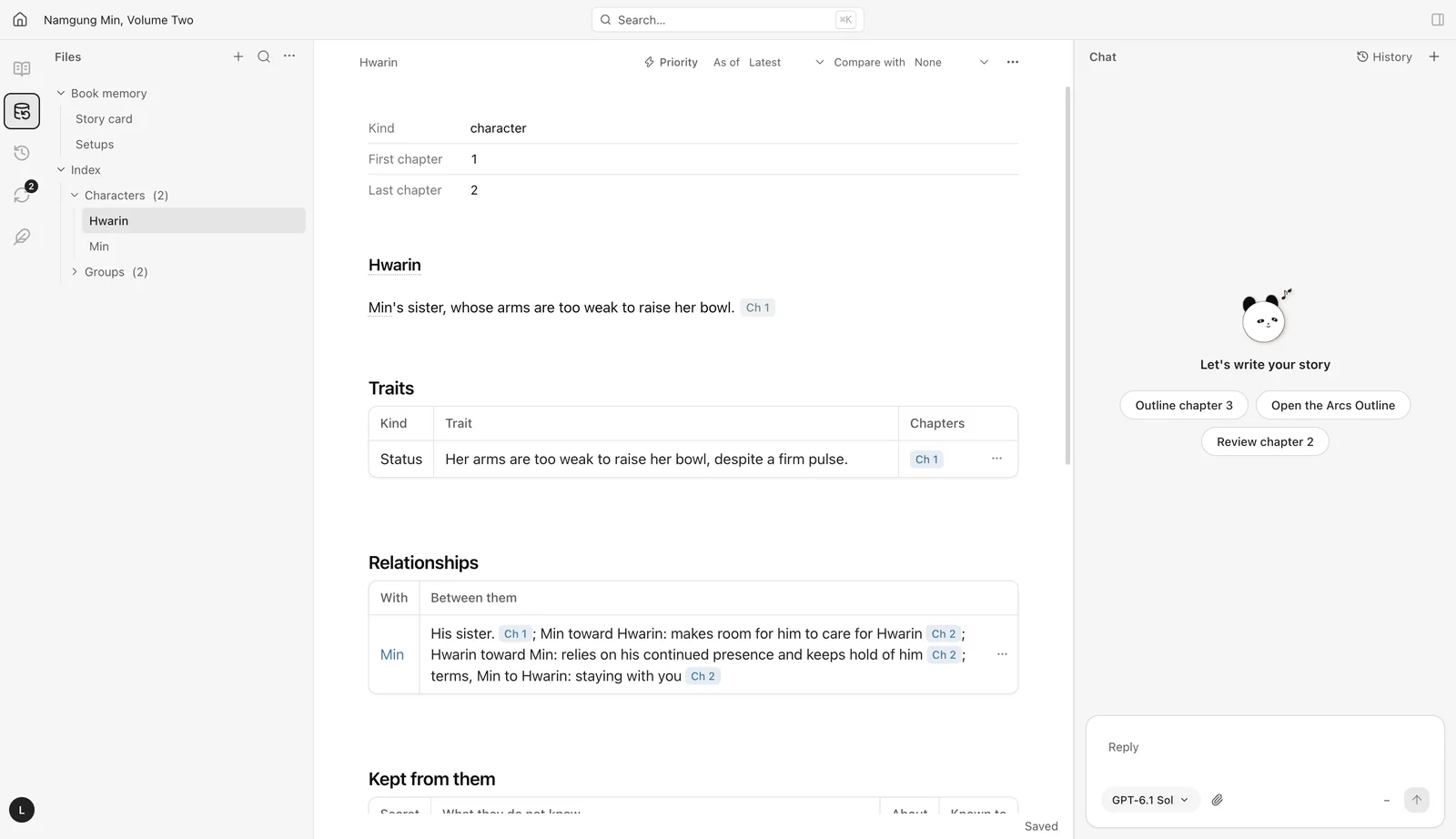
The planning view and Codex give a novel more structure than a plain chat window. An author can record people, places, lore, and story facts, then share Codex entries across a series. The official product also supports collaboration.
This approach is useful when continuity matters more than generating isolated passages. It gives the writer a place to inspect the source facts that an AI prompt uses.
The AI model is a separate decision
Novelcrafter describes AI as optional and connects to several providers and local models. This gives experienced users control, but it also means they must understand provider accounts, model cost, privacy settings, and prompt behavior.
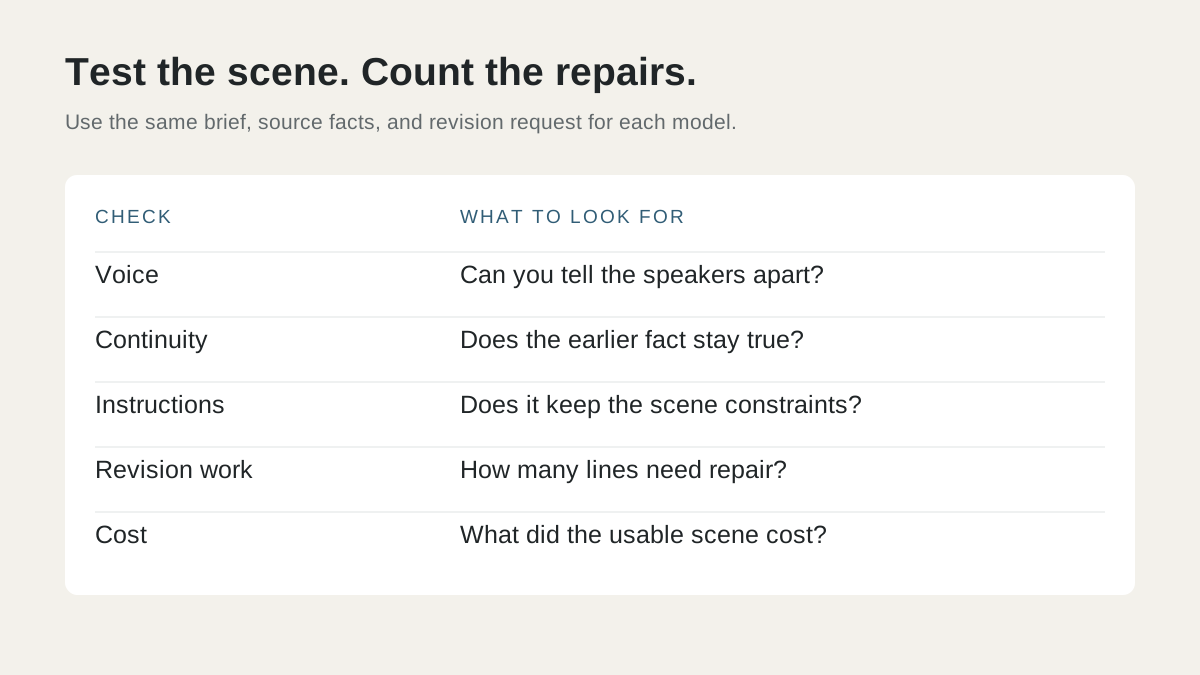
Test one representative scene before you commit to a model. Check dialogue, point of view, continuity, and the amount of rewriting required. A model that produces attractive single paragraphs can still fail across a complete chapter.
Who should consider it
Novelcrafter suits writers who want a flexible planning system and are comfortable choosing their own AI connection. It also suits series writers who need shared reference material across books.
Writers who want one installed app, a simpler setup, or a more guided drafting process should compare the complete workflow, not only the feature list. Count setup time, model charges, revision time, and how easily you can recover an earlier chapter state.
Run a real project test
Import or outline a short arc, create five core Codex entries, draft one difficult scene, and revise it. Then measure how many facts you had to repeat, how easy it was to find a prior decision, and whether the output still sounded like you.
- Plan one complete arc
- Create character and location entries
- Test the same scene with two models
- Export or back up the result