How to use Kakuyomu as an English-language reader
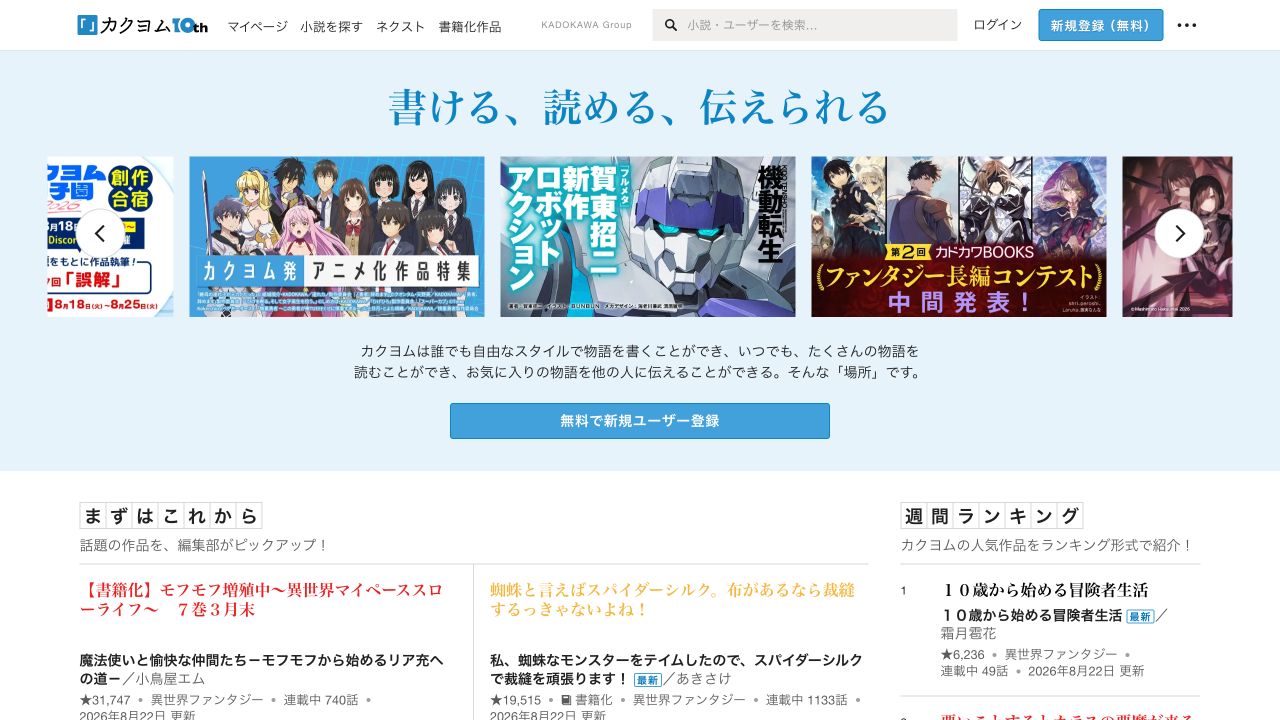
Kakuyomu is a KADOKAWA service where people can write, read, and recommend fiction. You can browse many works without an account. Registration adds update notices, reviews, support actions, and a personal library. The work cards provide enough information to avoid starting the wrong edition or an abandoned serial.
Find Japanese fiction, read status and access labels, follow active serials, and translate episodes without losing names or scene order.
Use the top navigation
小説を探す means “Find novels.” Use it when you know a title, author, genre, or tag. 書籍化作品 opens works that have a published-book edition. ネクスト opens Kakuyomu Next, which contains Kakuyomu original works and can use limited free-episode offers.
ログイン means sign in. 新規登録(無料) means free registration. マイページ is the personal page for saved works and account features.
Search with the exact Japanese title. If you found an English title on another site, first confirm the Japanese title and author through an official author or publisher page. Save the work URL after you confirm the result.
Read the work card before you open it
連載中 means ongoing. 完結済 means complete. The number before 話 is the episode count. 更新 follows the latest update date. 書籍化 means the work has a published-book edition. The star number is reader support, not the episode count.
A card can also show a promotional note such as 46話分無料, which means 46 episodes are free, or a date when expanded free access ends. Treat this as a current offer, not permanent access.
A published-book label does not mean the web and print texts are identical. Authors can revise, remove, or replace web chapters. Keep the exact work URL and note which edition you read.
- 連載中: ongoing serial
- 完結済: completed
- 話: episode
- 更新: updated
- 書籍化: published as a book
- 無料: free
Check the work page and episode order
Read the synopsis, genre, tags, author name, status, episode list, and notices. Some titles contain Web版 or 書籍版 to identify the web or book version. Do not remove that text when you save the title.
Open the first episode from the work table of contents. Record arc headings and special chapters. When you resume, confirm the last episode title as well as the number because side stories can appear between numbered chapters.
Registration can provide update notices and personal organisation. Keep a separate progress note if you read across devices or use more than one account.
Translate one complete scene as a test
Preserve episode headings, paragraph breaks, scene separators, punctuation, and ruby text. Record names, readings, honorifics, locations, organisations, and recurring terms before you translate many episodes.
Japanese can omit the subject and switch between names, titles, and relationship terms. Translate complete dialogue exchanges. Read the English scene once without the source, then compare any change in actor, tense, place, or viewpoint with the Japanese text.
Free access does not remove the author’s rights. Keep a private reading translation private unless the author or publisher has given you distribution permission.